
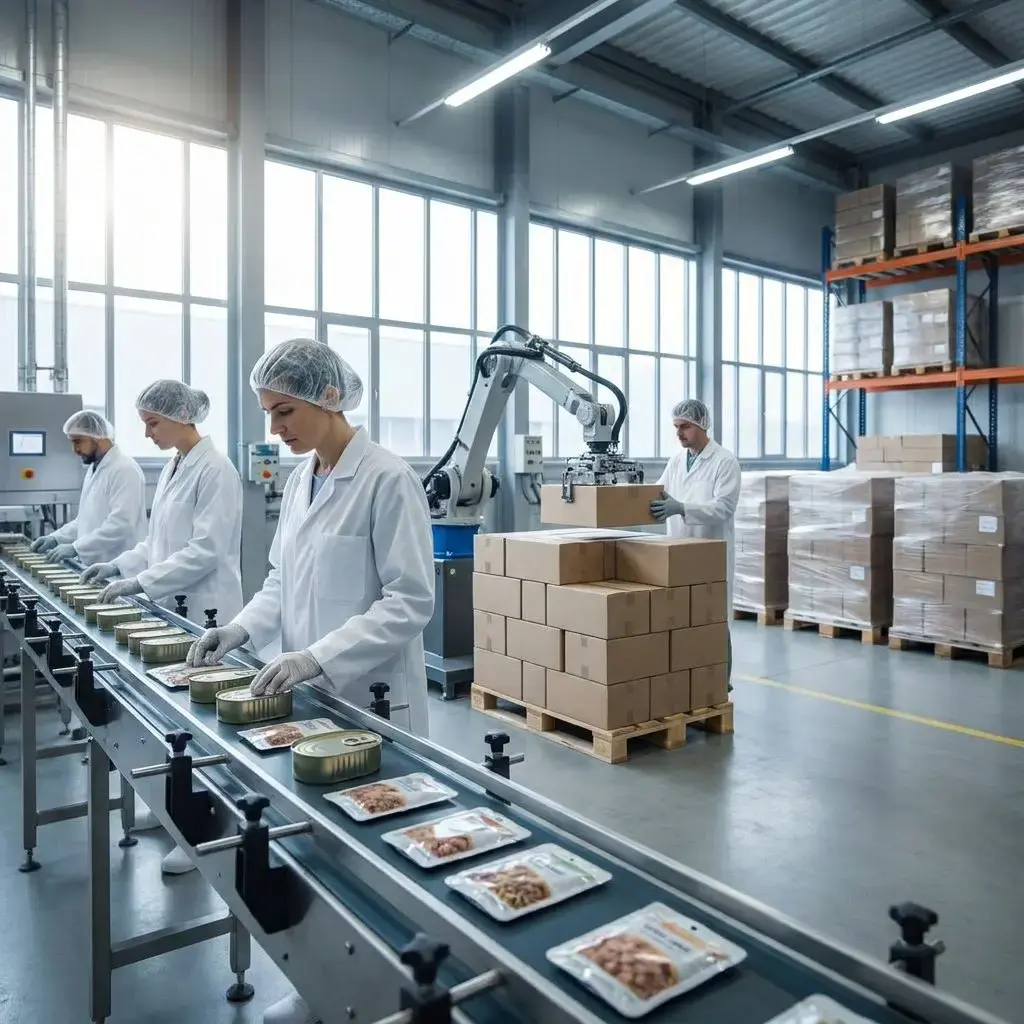

The pet food supply chain connects ingredient sourcing, formulation, manufacturing, packaging, logistics, retail and export. When one part slows down, the effect is often visible much later as stock gaps, higher costs, reformulations or delayed launches. In 2026, the biggest pressure points are still forecasting accuracy, protein availability, packaging supply, regulatory complexity and channel shifts such as e-commerce. For pet brands, manufacturers and exporters, understanding how the chain works is the first step toward making it more resilient and optimizing efficiency in the pet food supply chain.
From ingredients to shelf: how supply moves
Forecasting comes before production
A strong pet food supply chain starts with demand planning. Forecasts determine which ingredients to buy, which pack formats to reserve, how much factory capacity to book and where finished goods need to go. If sales projections are wrong, businesses either overstock slow-moving products or run short on fast-moving lines. This matters even more when recipes use specific proteins, functional additives or packaging components with longer lead times. For brands selling across retail, private label, online and export channels, forecasting must also reflect promotions, seasonality, market entry plans, MOQ and lead times for private label pet food and customer-specific requirements.
Sourcing, manufacturing and distribution must stay aligned
Once demand is clear, the next steps are securing ingredients, working with pet food ingredient suppliers, producing to specification and moving stock efficiently. That includes animal proteins, fish ingredients, grains, fats, oils, premixes, palatants and packaging materials such as cans, pouches, trays and bags. Many pet food formulas also depend on co-packers or external manufacturers, which adds another planning layer around production slots, audits and quality consistency. That is where a co-manufacturer checklist becomes useful. Distribution then covers warehousing, retailer delivery, e-commerce fulfilment and export shipping. The cat food supply chain and dog food supply chain follow the same basic flow, but ingredient profiles, format mix and palatability requirements can differ enough to create different risk patterns.
Why shortages still happen in cat and dog food
When people search for cat food shortage, shortage cat food or wet pet food shortage, the answer is usually not one single cause. Most shortages come from a combination of upstream and downstream issues. A recipe may depend on a tight poultry or fish supply, a specific vitamin premix, a certain can size or a factory line already running at capacity. A delay in only one of those inputs can stop output completely. Wet products are especially vulnerable because they depend on more packaging-intensive formats and sterilisation planning, while cats can also require narrower palatability profiles than dogs. That is why the supply chain for cat food can feel more fragile in practice, even when broader pet food availability looks stable. Shortages in 2026 are therefore more likely to be category-specific or SKU-specific than a universal market-wide absence of product.
The biggest risk points for brands and exporters
Raw materials, packaging and co-packer capacity
Raw material volatility remains one of the most important supply chain risks in pet food. Meat and fish inputs can be affected by harvest cycles, disease events, geopolitical tension, freight disruption or competition from the human food chain. At the same time, packaging shortages can create just as much disruption as ingredient shortages. Wet food is a clear example: if cans, lids, trays or pouches are late, finished product cannot ship even when the formula is ready. Businesses that rely on co-packers also face the added risk of limited line time, competing customer priorities and slower reaction speed during demand spikes. A clear supplier audit checklist can also help reduce quality and compliance risk.
Regulatory and export complexity
For companies selling into multiple markets, regulatory complexity is often underestimated. Labels, language, composition rules, documentation, import procedures and traceability expectations can vary by region. A product that is acceptable in one market may need relabelling, dossier changes or additional technical review in another. Those steps affect lead times, stock planning and launch timing. This is one reason the pet food supply chain is not only an operational challenge but also a technical and commercial one. Export growth depends on getting product, packaging and paperwork aligned before goods leave the factory, not after they arrive at the border.
Traceability, sustainability and cost control
Buyers, regulators and brand owners all expect more visibility than before. They want to know where ingredients come from, how responsibly they were sourced and whether packaging and logistics choices support broader sustainability goals. In pet food, resource efficiency also matters because the sector makes extensive use of by-products from the human food chain. When handled well, that can reduce waste and improve overall utilisation of animal and marine resources. When handled poorly, the business sees the opposite effect: excess inventory, write-offs, rushed sourcing decisions and avoidable freight cost. Good pet food ingredient traceability and better planning support both compliance and margin protection.
What is changing in the pet food supply chain
E-commerce and direct-to-consumer demand
Channel mix continues to reshape supply chain decisions. E-commerce requires different case counts, pack durability, fulfilment speed and inventory placement than traditional retail. Direct-to-consumer models also create more demand variability because promotional spikes can happen quickly and need immediate replenishment. For pet brands, that means packaging, warehousing and forecasting are no longer designed only for pallets to distributors. They also need to work for parcel networks, subscription models and mixed-channel sales strategies.
Data-led planning and alternative proteins
Technology is improving visibility across procurement, production and logistics. Better planning tools help teams forecast demand, manage reorder points, track supplier performance and spot disruption earlier. At the product level, the industry is also exploring alternative proteins such as insect protein, fermentation-derived ingredients and other new sources that may reduce pressure on traditional animal protein supply. These options are relevant, but they are not a simple shortcut. Adoption depends on cost, nutritional fit, processing practicality, regulatory acceptance and market readiness. For that reason, alternative proteins are best viewed as one part of a longer-term sourcing strategy rather than a quick fix for short-term shortages.
How specialist support reduces risk
Most supply chain problems in pet food sit between departments rather than inside one department. A sourcing issue becomes a formulation issue. A label issue becomes an export delay. A packaging decision affects logistics cost and shelf impact. That is why many companies benefit from support that combines product development, technical services, sourcing and commercial planning. GC Consulting positions itself as a global consulting partner in the pet industry, helping businesses connect new product development, technical and regulatory work, sourcing decisions and export-oriented sales and marketing support. For companies launching a new brand or expanding into new markets, that joined-up view can reduce avoidable delays and improve decision quality.
FAQs about the pet food supply chain
Will there be a pet food shortage in 2026?
No one can guarantee market-wide availability, but broad, universal shortages are less likely than targeted gaps in specific categories. The main risk areas remain wet products, certain protein sources, imported lines and SKUs that depend on tightly supplied packaging or specialist ingredients.
Why is wet cat food more vulnerable to shortages?
Wet cat food depends on cans, trays or pouches, dedicated production capacity and consistent access to highly palatable protein ingredients. If any of those elements are constrained, the product is harder to substitute or reroute than standard dry food, so out-of-stocks appear faster.
What is the 95% rule in dog food?
In the US, the 95% rule generally refers to ingredient naming. If a label uses a name such as "Chicken Dog Food," at least 95% of the named ingredients, excluding water and condiments, must come from that ingredient. Exact application depends on the market and labelling framework involved.
Who are the largest producers of pet food?
The global market is led by large multinational groups and major regional manufacturers, including private label producers. Their scale gives them strong influence over sourcing, packaging contracts, manufacturing capacity and distribution networks, which can shape availability across the wider market.