
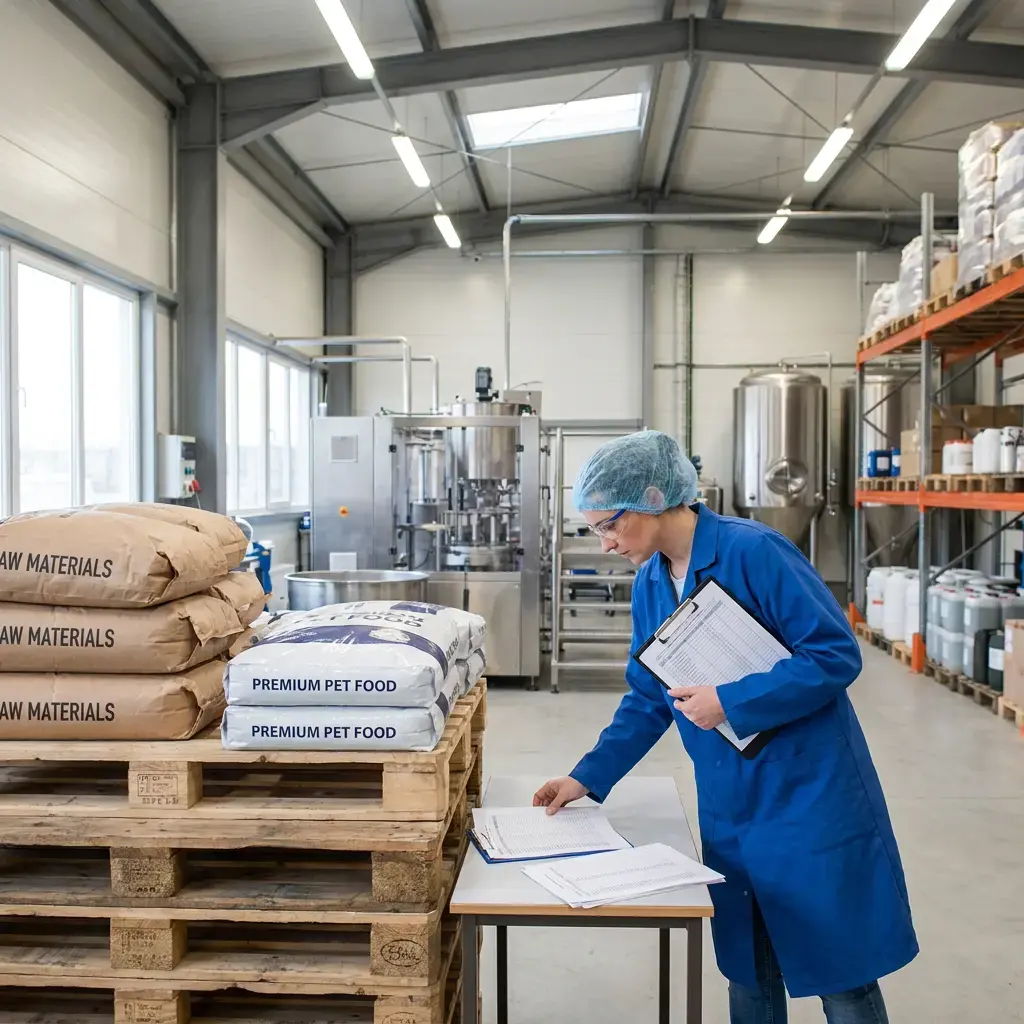

Pet food ingredient traceability is the ability to identify where each raw material came from, how it moved through production, which batch it entered, and where the finished product was distributed. For manufacturers and brand owners, this is not just a record-keeping exercise. It supports safer production, faster recalls, stronger supplier oversight, more reliable label claims, and better protection for the business when something goes wrong.
Why traceability has become a business-critical issue
Safety, trust, and recall control
Pet food businesses are under pressure from several directions at once. Regulators expect reliable records, customers expect clear sourcing information, and retailers want confidence that any issue can be contained quickly. At the same time, contamination events, specification deviations, and ingredient substitution risks can damage both product safety and brand credibility. A strong traceability process helps isolate affected lots instead of forcing a broad and costly response.
Traceability also matters because pet owners increasingly pay attention to ingredient origin, limited-ingredient recipes, special diet positioning, and transparency around sourcing. If a label makes a sourcing or composition claim, the underlying documentation must support it. In practice, that means linking supplier data, intake records, formulation, and finished batch information in a way that can be verified.
More than a compliance checkbox
Well-managed traceability improves day-to-day control as much as crisis response. It reduces uncertainty around stock, supports FEFO or FIFO handling where relevant, makes audits more efficient, and gives technical and commercial teams a clearer view of risk. The companies that manage traceability well usually make faster decisions because the right data is already available.
What an effective traceability system should capture
From goods-in to dispatch
An effective system should capture the key checkpoints across the full production chain. That normally includes supplier identity, ingredient name and specification, lot or batch code, date of receipt, quantity, storage location, and any supporting documents such as certificates, test results, or approvals. During manufacturing, the system should record which ingredient lots were weighed into which recipe, who performed the action, when it happened, and which packaging material and date code were used for the finished product.
Backward and forward traceability
Good traceability works in both directions. Backward traceability lets you start from a finished product complaint and identify the exact raw material lots and the pet food ingredient suppliers involved. Forward traceability lets you start from a suspect ingredient lot and see every affected work-in-progress and finished batch, plus the customers or markets that received it. Paper-based systems can achieve this, but digital records usually make the process faster, more consistent, and easier to test.
Traceability and compliance
Supporting HACCP, TACCP, and VACCP
Traceability is closely linked to broader food safety and risk management. HACCP focuses on process hazards, while TACCP and VACCP address deliberate attack, fraud, and supply chain vulnerability. Ingredient traceability strengthens all three because it improves visibility over sourcing, approvals, movement, and use. If a raw material has a fraud risk, allergen risk, contamination concern, or specification issue, strong records help you verify exposure and respond with precision.
Is traceability a legal requirement?
In many markets, yes, some level of traceability is expected as part of pet food regulations, record retention, and the ability to identify suppliers and customers. On top of that, customer standards and certification schemes often require more detailed proof of control. The exact depth depends on the market, product category, and business model, but the practical question is usually not whether traceability is needed. It is how complete, accurate, and fast your system needs to be.
Where pet food traceability often breaks down
Traceability problems rarely start with one major failure. More often, they come from small gaps between departments and systems. Common weak points include supplier names that do not match internal codes, ingredient lots transferred to bulk storage without clear segregation, manual weigh records that are hard to verify, rework that is not linked back to source batches, and packaging or label version changes that are not connected to production records.
Another frequent issue is a system that looks complete on paper but has never been stress-tested. Mock recalls and traceability exercises are useful because they show how long it really takes to retrieve data, confirm affected lots, and prepare evidence for customers or auditors.
How GC Consulting supports traceability projects
At GC Consulting, we help pet food businesses approach traceability as part of a wider technical and commercial system, not as an isolated document exercise. That can include reviewing ingredient and supplier flows, checking whether specifications and claims are supported by evidence, aligning product development with manufacturing reality, and identifying gaps that may slow audits, recalls, or market entry.
Because our work combines regulatory, technical, sourcing, and product expertise, we can support practical decisions across the full pet food supply chain, from raw material selection to finished product readiness. For businesses working across multiple markets, that joined-up approach helps reduce risk and improve speed without losing sight of commercial feasibility.
Frequently asked questions
What is the difference between ingredient traceability and batch tracking?
Batch tracking usually focuses on finished product batches. Ingredient traceability goes deeper by connecting each raw material lot to the exact recipe, process step, and finished batch where it was used. In practice, strong batch tracking depends on strong ingredient traceability.
What data should be kept for each ingredient lot?
At minimum, keep the supplier name, internal item code, supplier lot code, receipt date, quantity, storage location, specification reference, and the batches in which the ingredient was used. Many companies also keep test results, approval status, and related packaging or transport records where relevant.
Can traceability help validate label claims?
Yes. If a product makes claims about ingredient origin, recipe composition, or controlled sourcing, traceability records help show that the claim is backed by supplier documentation and batch-level use. Without that link, label verification becomes much more difficult during audits or customer reviews.
How often should a company test its traceability system?
There is no single rule for every business, but regular mock recalls are good practice, especially after changes in suppliers, recipes, packaging, or software. Testing should confirm not only that records exist, but that they can be retrieved quickly and used to make clear decisions under pressure.