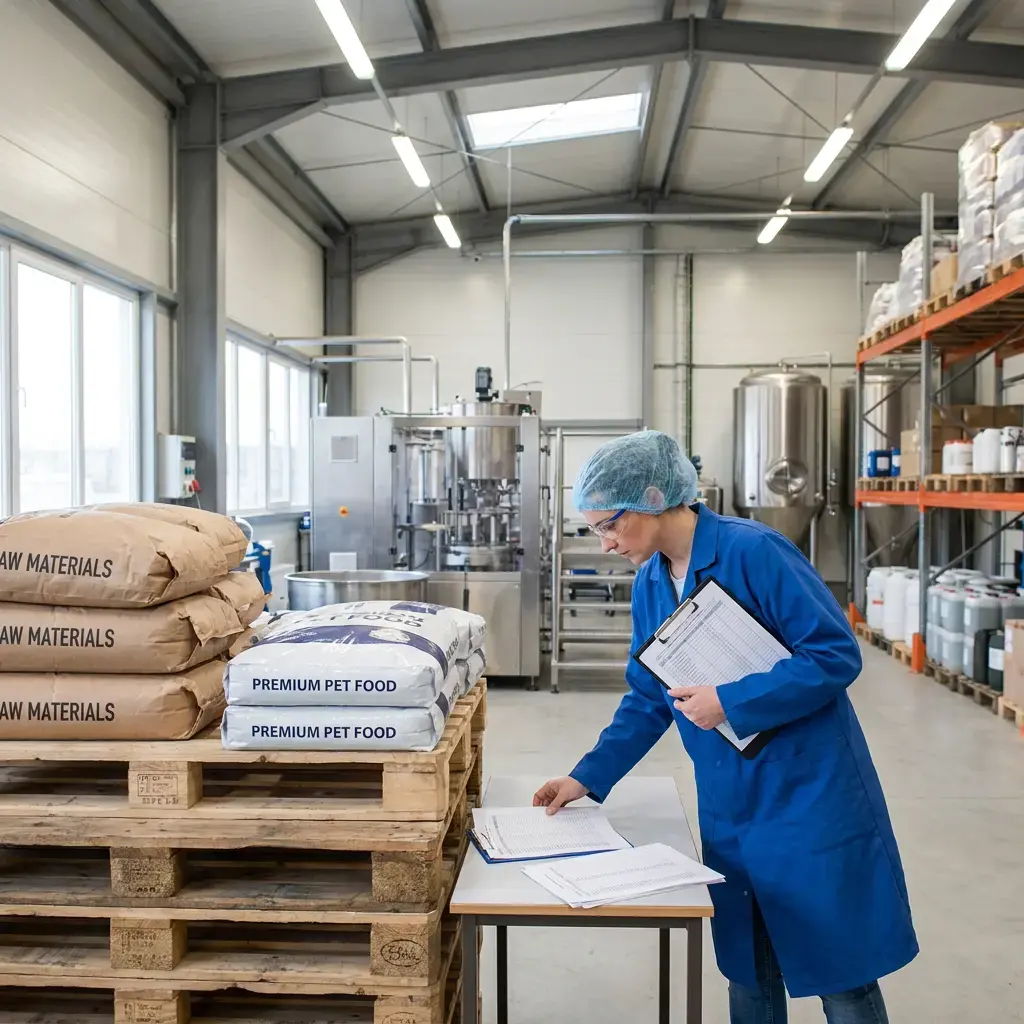


A pet food supplier audit checklist should help you answer one practical question: can this supplier deliver safe, compliant and specification-matching products consistently. Generic food audit lists often stop at hygiene and documentation. In pet food, you also need to verify ingredient origin, formulation control, carryover prevention, supply chain traceability, market-specific compliance and the supplier’s ability to manage complaints or recalls. The checklist below gives you a clear structure for first approval, routine reassessment and corrective follow-up.
What a pet food supplier audit should prove
Your audit should confirm four things. First, the supplier has the right scope, equipment and technical capability for the products you buy, whether that is kibble, wet food, treats, supplements or raw materials. Second, the site controls hazards through documented procedures and day-to-day practice. Third, records are detailed enough to prove consistency, traceability and release decisions. Fourth, the business can respond quickly when there is a deviation, complaint or regulatory issue. If one of these areas is weak, supplier approval should at least be conditional.
Core sections to include in your checklist
Supplier approval and management controls
Scope, legal status and change control
Verify legal entity details, site address, activities performed on site, subcontracted steps and the markets served. Your checklist should also confirm how the supplier manages changes to recipe, raw material origin, processing parameters, packaging, labels or manufacturing location. Uncontrolled change is a common reason why approved products drift away from specification.
Food safety system and management oversight
Check for a documented hazard analysis, prerequisite programs, internal audits, training records, corrective action follow-up and management review. It is not enough that procedures exist on paper. Interview staff and compare answers with records and floor practice. A reliable supplier shows clear ownership of deviations, deadlines for corrective action and evidence that problems do not repeat.
Site, hygiene and production controls
Facility condition, sanitation and pest management
Review layout, traffic flow, segregation, equipment cleanability, waste handling, water use and preventive maintenance. Cleaning routines should match the product risk and the ingredients handled. Pest control needs to cover the full site, with trending, corrective actions and rapid escalation when activity is found. Staff hygiene, protective clothing and visitor control should support contamination prevention, not exist as a box-ticking exercise.
Raw materials, formulation and cross-contamination
For pet food, this is where a generic audit checklist often falls short. Check how incoming materials are approved, inspected, coded, quarantined and released. Review weighing accuracy, premix handling, recipe control, rework rules and line clearance between products. The supplier should be able to prevent carryover of allergens, restricted materials, incompatible species claims and foreign matter through practical controls such as segregation, sieving, magnets or detector systems.
Verification, release and incident readiness
Testing, specifications and product release
Confirm what is tested, why it is tested and who can release product. Useful checklist points include sampling plans, retention samples, calibration, nutrient verification, microbiological or contaminant checks where relevant, packaging integrity and shelf-life support. When results fall outside limits, the supplier should show a clear hold, investigation and disposition process rather than informal decision-making.
Traceability, complaints and recall response
The supplier should trace raw materials into finished lots quickly and prove where each lot was shipped. Review mock recall performance, complaint trending, root cause analysis and nonconforming product control. If records are slow to retrieve or product status is unclear in storage, the risk is high even when the rest of the site looks acceptable.
Pet food audit red flags that need follow-up
Common warning signs are incomplete batch records, weak quarantine control, repeated cleaning deviations, missing calibration evidence, inconsistent answers from staff, open corrective actions with no owner and poor visibility of rework or rejected stock. Another major red flag is when a supplier can describe policies but cannot show current evidence from the production floor. Treat several small gaps across documentation, hygiene and traceability as a system issue, not as isolated findings.
Frequently asked questions
How is a pet food supplier audit different from a standard food audit?
It covers the same hygiene and quality basics, but it places more emphasis on pet food regulations, nutrient consistency, ingredient origin, carryover prevention, species claims and pet food labeling impact.
Which suppliers should be audited on site?
Focus on suppliers that materially affect safety, legality or brand claims, such as ingredient suppliers, premix suppliers, co-manufacturers, treat producers and high-risk storage or logistics partners.
How often should the audit be repeated?
Use a risk-based frequency. New suppliers, higher-risk ingredients, major process changes or poor performance justify more frequent reassessment than stable low-risk suppliers.
Can a remote audit replace an on-site audit?
Remote reviews are useful for document screening and corrective follow-up, but higher-risk suppliers usually still need an on-site audit to verify actual hygiene practice, product flow and operational discipline.
If you need a pet food supplier audit checklist tailored to your products, sourcing model or target market, GC Consulting supports brands and manufacturers with practical technical services, commercial and regulatory guidance throughout supplier selection and market launch.