
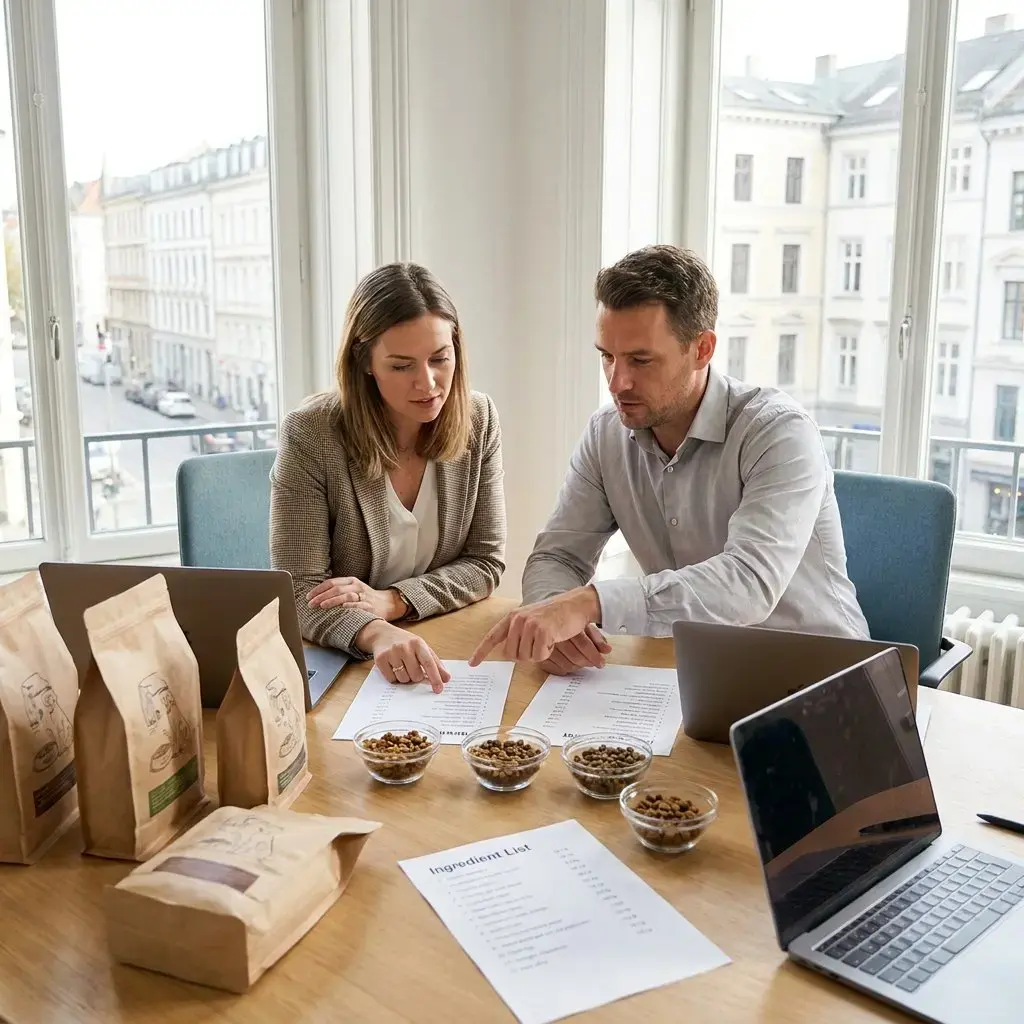

If you are looking for a pet food contract manufacturer, the factory itself is only part of the decision. The right partner must fit your product concept, ingredient strategy, packaging format, target market, and launch plan. For many pet brands, importers, and market entrants, delays happen because the manufacturing brief is incomplete long before production starts.
GC Consulting helps pet-industry companies approach contract manufacturing in a more structured way. That means clarifying the product brief, aligning technical and regulatory requirements, supporting sourcing decisions, and preparing for commercial rollout and export. Whether you are evaluating private label vs. white label pet food or building a more customized concept, a clear process saves time, rework, and avoidable cost.
Private label, OEM, and custom pet food manufacturing
Pet food contract manufacturing usually falls into three routes. Private label is the fastest option when you want an existing formula with your own brand and packaging. OEM production often means working from a manufacturer base while adapting recipe details, pack sizes, or market positioning. A custom development route starts with a more specific brief and requires closer work on formulation, ingredient selection, claims, and technical feasibility.
Which route fits your project?
If speed to market matters most, a private label pet food manufacturer can be efficient. If your brand needs a differentiated recipe, target benefit, or export-specific label strategy, a more customized route is often stronger. The right choice depends on your category, expected volumes, budget, and how much control you need over formula, sourcing, and presentation. A good decision here prevents problems later with margins, minimum order quantities and lead times for private label pet food, and market fit.
What to expect from a pet food contract manufacturer
A suitable manufacturing partner should do more than confirm available capacity. You need a realistic match between the plant and your product. Some facilities are better suited to dry food, others to wet food, treats, toppers, supplements, or more specialized formats. You also need clarity on ingredient handling, palatability components, packaging options, batch size, lead times, and whether the site can support your quality expectations.
Product, process, and quality fit
Strong contract manufacturing support includes clear specifications, traceability, stable sourcing, and practical communication around trials, scale-up, and documentation. It is also important to understand how the manufacturer handles recipe adjustments, packaging validation, shelf-life work, analytical checks, and label information. If your project is aimed at more than one market, the manufacturer must fit not only the formula but also the technical paperwork and logistics behind it.
How to choose the right manufacturing partner
The best pet food contract manufacturer for one brand may be the wrong choice for another. Start by reviewing technical fit, commercial fit, and market fit together using a pet food co-manufacturer checklist. A low unit price does not help if the plant cannot handle your preferred ingredients, if the minimum volume is too high, or if the packaging line does not support your sales channel. A strong partner should be transparent about capabilities, limitations, timelines, and development requirements.
Questions worth answering before you commit
Ask whether the proposed factory can produce the exact format you need, not just a similar one. Check how formulations are approved, which inputs you may source yourself, what quality documents are available, and how artwork and label control are managed, then review them against a supplier audit checklist. Also review contingency planning, production scheduling, and how easily the partner can support future growth.
Regulatory and export readiness
If you plan to sell across borders, manufacturer selection becomes more technical. Label language, market-specific rules, documentation, and logistics can affect both the formula and the packaging. Export-ready manufacturing is not only about production capacity. It is about whether the full process can support the destination market without last-minute changes or shipment risk.
How to create your own dog or cat food brand
You do not need to own a factory to launch a pet food brand, but you do need a disciplined project structure. Begin with a clear pet food formulation brief covering species, format, positioning, ingredient direction, expected price point, pack size, and target markets. From there, the formulation route, sourcing model, and packaging concept can be matched to realistic manufacturing options.
From idea to launch-ready brief
Many new brands lose time by speaking to manufacturers too early, before the commercial and technical brief is defined. A better approach is to align product goals, regulatory considerations, packaging, and route-to-market before final factory selection. This makes discussions with manufacturers more productive and helps you compare like with like. It also improves cost visibility and reduces the risk of repeated reformulation or artwork changes.
Why pre-production guidance matters
Most manufacturing problems begin upstream. An unclear specification can lead to the wrong quotation. A weak ingredient brief can create supply issues. An unreviewed label can slow approval. A packaging design that looks right commercially may still be impractical on a chosen line or unsuitable for a target export market. These are common gaps between a good brand idea and a launch-ready product.
This is where technical, sourcing, and commercial guidance adds real value. Instead of treating manufacturing as a single buying decision, it should be managed as a connected process that links product development, compliance, packaging, supplier coordination, and market execution.
How GC Consulting supports pet food manufacturing projects
GC Consulting is not presented as a standalone pet food factory. It acts as a specialized global consulting partner in the pet industry for companies that need help developing products, selecting the right manufacturing route, and preparing for launch or export. Based in Erembodegem and working internationally, GC Consulting supports pet-industry businesses with practical guidance across New Product Development, Technical Services, and Sales and Marketing.
New Product Development
This includes helping define the product concept, refining the brief for manufacturers or suppliers, and connecting development choices to realistic commercial goals. The aim is to reduce friction between idea, formulation, sourcing, and factory execution.
Technical Services
Support can include quality-related coordination, regional regulatory guidance, label control, translation, packaging design input, analytical testing coordination, and other technical steps that often slow projects when they are not managed early.
Sales and Marketing
For companies building a new pet food brand or entering new markets, manufacturing is only one part of success. GC Consulting also aligns product decisions with market positioning, export plans, and broader commercial rollout, so the project is not technically sound but commercially disconnected.
FAQ about pet food contract manufacturing
What is the difference between private label and custom pet food manufacturing?
Private label usually means choosing from an existing formula range and launching it under your own brand. Custom manufacturing involves more control over recipe, ingredients, positioning, and packaging, but it also requires more development time, technical coordination, and approval work.
Can I launch my own dog food brand without owning production?
Yes. Many brands use contract manufacturers or private label partners. The key is to prepare a clear brief, choose a realistic production model, and manage regulatory, sourcing, packaging, and commercial decisions early so the launch is workable from both a factory and market perspective.
What should I prepare before contacting a pet food contract manufacturer?
Prepare your target species, product format, positioning, ingredient direction, pack sizes, expected volumes, target markets, and desired price range. The stronger the brief, the easier it is to compare manufacturers accurately and avoid unexpected changes later in development.
What is the 95% rule in dog food?
The 95% rule generally refers to naming conventions for certain pet food products in some markets, where a named ingredient must make up at least 95% of the product excluding water or processing aids. Exact application depends on local rules, so label review should always reflect the destination market.
How does export affect manufacturer choice?
Export can affect formula decisions, labels, languages, documents, packaging, and logistics. A manufacturer that works well for a domestic launch may not be suitable for an international rollout. That is why export planning should be part of the manufacturer selection process from the beginning.