
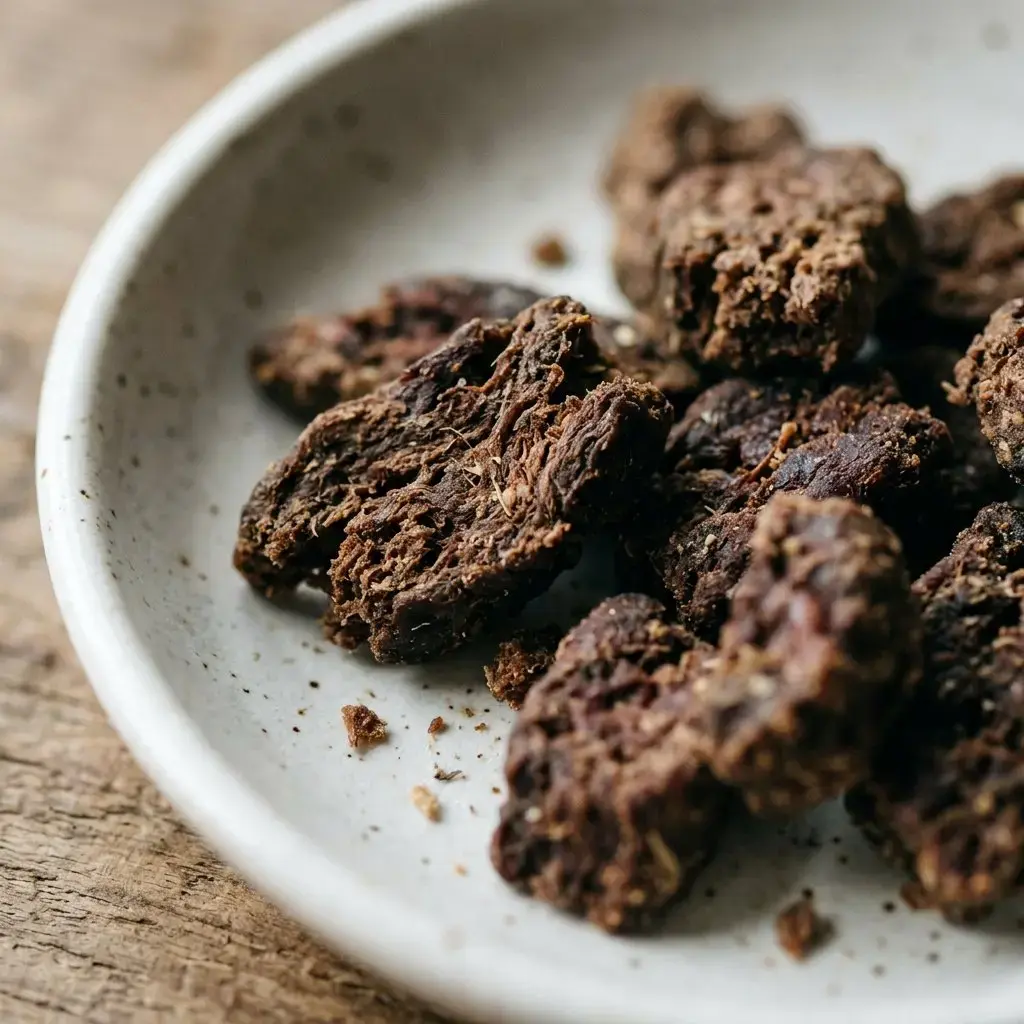

Air-dried cat food is a shelf-stable format made by removing moisture with circulating warm air. It is not just kibble with premium branding. The format attracts attention because it is often marketed as meat-forward, aromatic and easier to manage than raw feeding. The key is to compare formats first, then check completeness, recipe quality, storage and suitability.
How air-drying changes the final cat food
Air-drying lowers moisture with warm circulating air to create a room-temperature product. Less water also means a more concentrated smell and texture, which is why air-dried food for cats is often positioned for strong palatability. In practical terms, it is typically scoop-and-serve and simpler to store than raw.
How air-dried food compares with raw, kibble, and freeze-dried options
| Format | Main difference | What to check |
|---|---|---|
| Raw | Air-dried is easier to store and serve; raw needs colder storage and more handling. | Do not confuse “air-dried raw” search language with the actual format. |
| Kibble | Air-dried is usually denser, differently textured and often positioned at a higher price point. | Portion size and calorie density may differ. |
| Freeze-dried | Moisture is removed differently and the texture is often lighter. | Some products are served as is; others are rehydrated according to the pack. |
The better choice depends on formulation quality, the cat’s needs and whether the product is intended for complete daily feeding, rather than assumptions carried over from air-dried dog food.
What to check on the label before you buy
- Confirm whether the product is a complete everyday food or a topper, mixer or treat.
- Look for clearly named animal proteins, life-stage suitability and any sourcing or gentle-processing claims.
- Read the feeding guide, room-temperature storage advice and freshness instructions after opening.
- Do not assume that a recipe name or premium wording proves ingredient quality or nutritional adequacy.
Common brands, recipe names, and pack formats you will see in this category
| What you will see | Examples | What to verify |
|---|---|---|
| Brand-led searches | Ziwi Peak, Catit, Meow, Wellness CORE, Zeal Canada, Absolute Holistic, Dolina Noteci | Check that the result is truly an air-dried line, not a standard dry or other preserved format. |
| Recipe-led names | Chicken, lamb, beef, venison, mackerel and lamb, salmon, tuna, duck, gamefowl | The recipe name alone does not confirm the full formulation or nutrient profile. |
| Sub-lines and regional labels | East Cape, Hauraki Plains, Provenance, Gold Fern, Air & Gamefowl, Daily Cat Cuisine | Sub-line names may vary by market and do not guarantee the same ingredient mix. |
| Pack formats | Trial packs, 1 kg bags and larger economy packs | Check storage after opening, daily feeding cost and whether the size fits expected use. |
What brands should validate before launching an air-dried cat food line
- Turn claims such as natural ingredients, gentle drying, preserved nutrition and shelf stability into evidence through formulation, process control and pet food shelf life testing.
- Validate ingredient sourcing, pet food palatability testing, shelf-life performance and packaging choice under realistic storage conditions.
- Align the feeding purpose, label wording and compliance work early; air-dried affects formulation, processing and market positioning, especially when working with a pet food contract manufacturer.
- For brands developing formats like air-dried cat food, GC Consulting supports relevant work across new product development, technical services, sourcing and market readiness.