
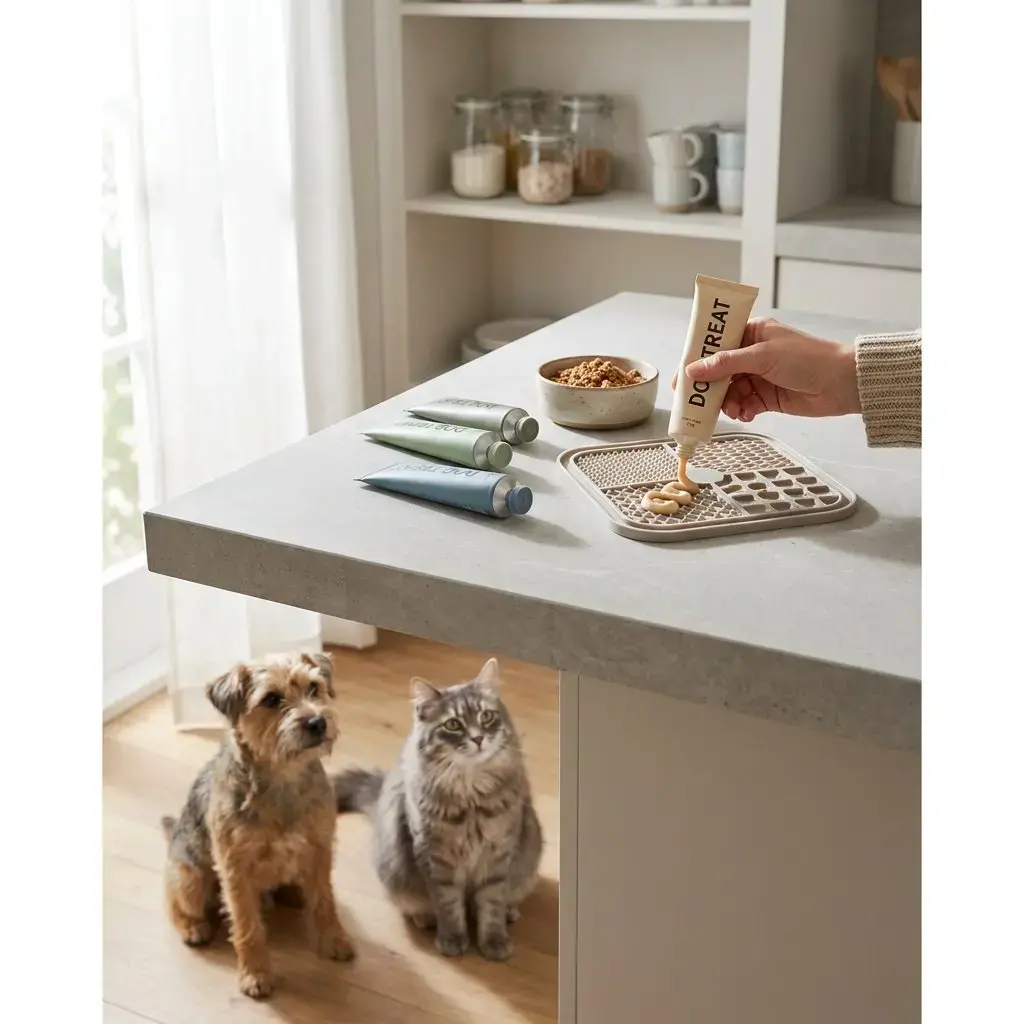

Liquid pet treats are lickable, high-palatability rewards used in small portions for cats and dogs. They are especially useful when you want repeated reinforcement, a softer texture, or a cleaner reward than crumbly treats. For cats, a liquid snack is often used for bonding, enrichment, or as a topper. For dogs, liquid treats are popular in training, licking mats, and medication routines. The important distinction is that a liquid treat is a complementary reward, not a complete meal.
What makes a product a liquid pet treat?
A true liquid pet treat is formulated for occasional or controlled reward use and is usually packed in sticks, tubes, pouches, or dispensers that allow small servings. That is different from gravy or jelly wet food, which is more closely linked to meal feeding, and different again from soups or broths that may sit between snack and topper.
| Format | Best fit | How it differs |
|---|---|---|
| Liquid treat | Reward, bonding, training | Small portions, complementary use |
| Soup or broth snack | Hydration-adjacent snacking, topper use | Looser texture, less training-focused |
| Gravy or jelly wet food | Meal or topper | More feeding-oriented than reward-oriented |
| Soft chew or pate-style reward | Treats, enrichment, medication support | Soft, but not fully liquid |
When liquid treats are the better option
Training and behavior support
Liquid treats work well when a pet needs many quick rewards without grabbing, crunching, or breaking focus. In dogs, they are often used for luring, shaping, position work, and reducing snatching because the pet licks instead of lunging for a biscuit. In cats, liquid cat snacks are helpful for carrier training, handling practice, and calm reinforcement during grooming or nail care. Because the reward can be delivered in tiny repeated amounts, the handler keeps better control over timing and pace.
Feeding routine and calorie control
The practical advantage of liquid treats is portion control. A small lick can be enough for one repetition, which helps when training sessions are frequent. That does not automatically make every product low calorie, though. Energy density, serving size, and daily frequency still matter, especially for pets with weight concerns or restricted diets. Liquid treats should support the normal feeding plan, not quietly replace it.
- Count treat intake within the full daily ration.
- Use very small servings for high-frequency training.
- Separate pets during reward sessions in multi-pet homes.
- Choose packaging that allows clean, controlled dispensing.
In multi-pet households, liquid treats can also create fewer dropped crumbs and less competition, but only if each pet has a separate station or turn. Single-serve sticks and resealable packs make this easier.
Liquid treats compared with other reward formats
Liquid treats are not the only option. Common alternatives include squeezable pate products, mousse or paste formats, semi-moist training treats, kibble for highly food-motivated dogs, and broth-style cat snacks. The right format depends on the job. If the goal is precise reward delivery, a smooth texture and easy one-hand dosing matter most. If the goal is enrichment or treat variety, a broader range of textures can work. For brands, this means the format should follow the use case, not the other way around.
What pet brands should consider before launching liquid treats
For manufacturers and brand owners, liquid pet treats sit at the intersection of palatability testing, texture control, packaging, and positioning. Viscosity has to support easy licking and consistent dosing. Pack format has to support freshness and shelf-life testing while staying practical for consumers. Labels and claims should clearly communicate that the product is a treat, topper, or complementary feed, without overstating benefits. For export-oriented brands, technical documentation, label review, translation, sourcing, and market-specific compliance also need to be aligned early. GC Consulting supports pet-industry companies with new product development, technical services, and commercial guidance when building pet treat concepts and planning a liquid snack production setup for international markets.
Frequently asked questions
Are liquid pet treats the same as liquid cat snacks?
Often, yes, but not always. Many liquid snacks for cats are treat products, while others are closer to soups, broths, or topper-style wet formats.
Can liquid treats replace a meal during training?
No. They are best used as complementary rewards. If training volume is high, the total daily ration should be adjusted carefully so overall feeding stays balanced.
Are liquid treats useful for medication routines?
They can help create a positive routine or mask taste in some cases, but suitability depends on the medicine, the pet, and any dietary restrictions. Veterinary guidance is best when medication is involved.